
CELEBRITY
JUST IN: Iranian Foreign Minister Seyed Abbas Araghchi Says: “Ignoring his own People, Mr Starmer is putting British lives in danger by allowing UK bases to be used for aggression against Iran. Iran will exercise its right to self-defence…

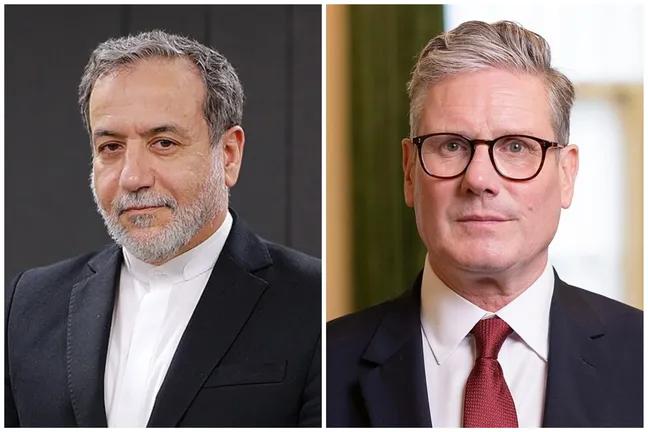
In a sharply worded statement amid escalating tensions in the Middle East, Iran’s Foreign Minister Seyed Abbas Araghchi has directly criticized British Prime Minister Keir Starmer, accusing him of endangering British citizens by permitting UK military bases to support US operations against Iran.
Araghchi posted on X (formerly Twitter) late on March 20: “Vast majority of the British People do not want any part in the Israel-U.S. war of choice on Iran. Ignoring his own People, Mr. Starmer is putting British lives in danger by allowing UK bases to be used for aggression against Iran. Iran will exercise its right to self-defense.”
The remarks come in response to the UK government’s recent approval for the United States to utilize British military facilities—including bases in the region and potentially others like Diego Garcia in the Indian Ocean—for strikes targeting Iranian missile sites. These sites have been linked to attacks on shipping in the Strait of Hormuz, a vital global trade route.
Araghchi’s post echoed comments he made during a phone call with UK Home Secretary Yvette Cooper (some reports reference Foreign Secretary), where he described the UK’s cooperation as “participation in aggression.” He reportedly told Cooper that such actions would be “recorded in the history of relations between the two countries” and demanded Britain halt any support for US operations. He also criticized what he called the UK’s “negative and biased” stance toward the conflict, which Iran frames as a violation of international law.
The Iranian minister emphasized Tehran’s commitment to defending its sovereignty under Article 51 of the UN Charter, which permits self-defense against armed attacks. This rhetoric aligns with Iran’s broader narrative portraying the ongoing hostilities— involving the US, Israel, and now indirect UK involvement—as an unprovoked “war of choice.”
The UK’s decision marks a shift, as earlier reports suggested Prime Minister Starmer had initially resisted full US access to British bases for direct strikes on Iran. However, amid intensifying regional exchanges—including Iranian missile attempts on the joint US-UK base at Diego Garcia—the government appears to have aligned more closely with Washington.
No immediate official response from Downing Street has been issued to Araghchi’s specific accusations, though UK officials have reiterated warnings against Iran targeting British interests or territory directly. The Foreign Office has stressed that cooperation focuses on regional stability and countering threats to international shipping.
The statement has drawn significant attention on social media, with Araghchi’s original post garnering tens of thousands of likes, reposts, and views. It has been widely shared by Iranian state-affiliated outlets and international observers, highlighting divisions over Western involvement in the conflict.
As the situation develops, the exchange underscores the risks of escalation in an already volatile region, where diplomatic channels remain strained and military posturing continues on multiple fronts. Iran has maintained that its actions are defensive, while Western allies argue they are necessary to protect global navigation and deter further aggression.
This latest warning from Tehran serves as a stark reminder of the potential consequences for nations perceived as facilitating strikes against Iran, raising questions about the UK’s role in the broader US-Israel-Iran confrontation.



MINNESOTA FREEDOM CAUCUS ANNOUNCES IMPEACHMENT HEARINGS FOR TIM WALZ AND KEITH ELLISON NEXT WEEK The Minnesota House Freedom Caucus just dropped a bombshell that every conservative in the state has been waiting for. In a powerful video statement filmed inside the state capitol, the group confirmed impeachment proceedings are moving forward against Governor Tim Walz and Attorney General Keith Ellison. Here is the full statement from the Minnesota House Freedom Caucus👇👇

MELANIA TRUMP DESTROYS EPSTEIN SMEARS IN POWERFUL WHITE HOUSE SPEECH: THE LIES END TODAY First Lady Melania Trump delivered a no-nonsense takedown of the baseless Epstein lies peddled by left-wing hacks and political opportunists desperate to smear the Trump family. Speaking from the White House, she set the record straight with grace and steel, exposing the mean-spirited attacks for what they are: cheap attempts to damage her reputation and score political points. Enough is enough, she declared, and now its time for Congress to deliver real transparency for the victims instead of endless speculation. Here is her full statement:👇👇

Shockwaves in City Hall: Zohran Mamdani Faces Explosive Citizenship Battle as Deportation Calls Intensify A political firestorm is erupting as newly elected New York City Mayor Zohran Mamdani is thrust into a high-stakes legal and national controversy that could end his tenure before it begins. Lawmakers, led by Randy Fine, are demanding a sweeping probe into his past, alleging hidden affiliations and possible fraud during his naturalization process. With the Department of Justice under pressure and allies like Andy Ogles joining the charge, the question looms: was Mamdani’s rise built on a secret that could now trigger his dramatic fall? Check out👇👇

Breaking: Trump to Iran: “End Hormuz Toll Now—Or Pay the Price” As Iran tightens its grip on the Strait of Hormuz, where nearly a quarter of global oil flows, tensions surge to a breaking point. Donald Trump fires a stark warning—end the tolls or face consequences. With hundreds of ships stalled and oil markets on edge, the fragile ceasefire hangs by a thread. One wrong move could ignite a global crisis, turning economic pressure into full-blown confrontation… Full detail👇👇

BREAKING: Donald Trump branded “petty” after subtly throwing shade at the Artemis II crew, turning a historic space moment into an unexpected ego orbit, leaving critics saying even the Moon wasn’t far enough from the drama. Check full details👇👇👇

BREAKING: “Totally Planned” Ceasefire Declared After Everything Goes Wrong at Once In what officials are calling a “strategic masterstroke that definitely wasn’t forced,” Donald Trump has agreed to a ceasefire in the ongoing conflict with Iran—a decision reportedly made after several inconvenient developments, including military setbacks, a global energy meltdown, and Americans collectively asking, “Wait… what is happening?”

I don’t share these moments often, but being their mom is my favorite place to be Serena Williams post a picture with her children…

Serena Williams has life-threatening health complications after childbirth to battling injuries that kept her off the court for months…

These 20 New Serena Williams Amazing Mouth-Watering Wet Body Photos Set the Mood… The Wet Kind. Fans Can’t Handle Them – Especially the 7th Photo Where She Flashes the HUG…

Unbelievable : Fans can’t believe their eyes after Serena Williams dropped a series of steamy photos that have set social media ablaze…

Look at 25 Serena Williams’ private photos that’s dazzled everyone…
